Anger is a natural human emotion. Everyone experiences frustration, disappointment, and irritation from time to time. However, when anger becomes frequent, intense, or difficult to control, it can begin to damage the relationships that matter most.
Many people don’t realize how much their anger is affecting their spouse, children, family members, friends, or coworkers until significant problems have already developed. Recognizing the warning signs early can help you make positive changes before lasting damage occurs.
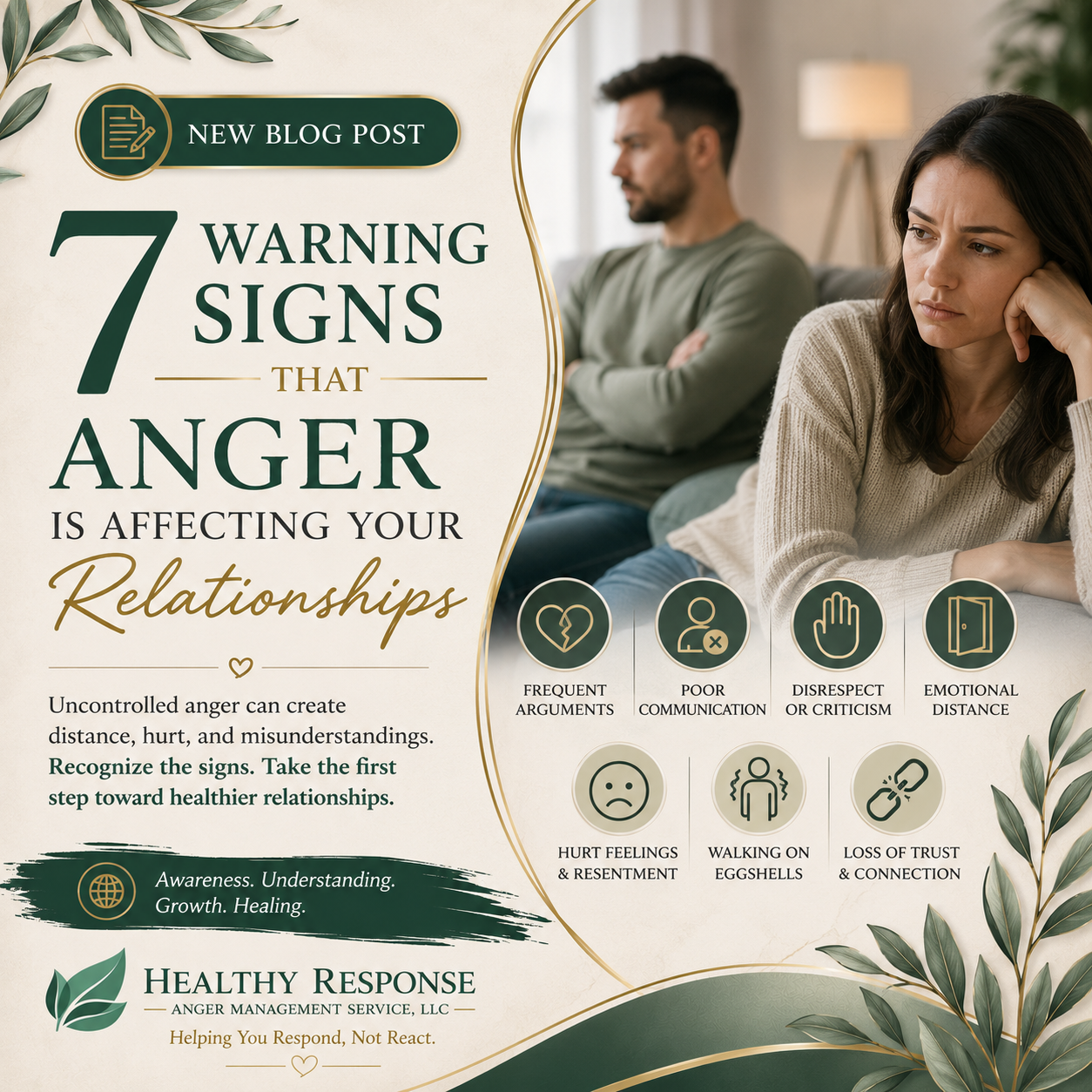
Here are seven common signs that anger may be negatively impacting your relationships.
1. Arguments Escalate Quickly
Do small disagreements often turn into major conflicts?
Healthy discussions allow people to express different viewpoints without hostility. When anger becomes a problem, even minor frustrations can rapidly escalate into yelling, insults, blame, or emotional outbursts.
If conversations frequently become heated or feel out of control, it may be a sign that anger is interfering with effective communication.
Ask Yourself:
- Do I raise my voice during disagreements?
- Do small issues become major arguments?
- Do I struggle to stay calm when challenged?
2. People Walk on Eggshells Around You
One of the clearest indicators that anger is affecting relationships is when others become hesitant to communicate openly.
Family members, friends, or coworkers may begin avoiding difficult conversations because they fear your reaction. They may carefully choose their words, withhold concerns, or avoid bringing up problems altogether.
When people feel they must “walk on eggshells,” trust and honest communication often suffer.
Warning Signs:
- Loved ones seem nervous around you.
- People avoid discussing certain topics.
- Others appear relieved when conflicts are avoided.
3. You Frequently Feel Regret After Arguments
Have you ever said something in anger and immediately wished you could take it back?
Anger often causes people to speak impulsively, make accusations, or use hurtful language they don’t truly mean. While apologies are important, repeated emotional outbursts can leave lasting scars on relationships.
If regret follows many of your interactions, it may be time to examine how anger is influencing your behavior.
4. Loved Ones Are Becoming Distant
When anger repeatedly creates tension, people may begin emotionally withdrawing to protect themselves.
This distance can appear in many ways:
- Less communication
- Reduced affection
- Avoidance of spending time together
- Increased emotional separation
Over time, unresolved anger can weaken the connection and closeness that healthy relationships depend upon.
Ask Yourself:
- Have my relationships become less connected?
- Do loved ones seem less willing to spend time with me?
- Have conversations become shorter or less meaningful?
5. You Struggle to Listen During Conflict
When emotions run high, many people focus on defending themselves rather than understanding the other person’s perspective.
Instead of listening, you may find yourself:
- Interrupting
- Becoming defensive
- Planning your response while the other person is speaking
- Dismissing their feelings
Effective communication requires active listening. When anger takes over, genuine understanding often becomes difficult.
6. Your Children Are Mimicking Angry Behaviors
Children learn by observing the adults around them.
If children frequently witness yelling, aggressive communication, or angry reactions, they may begin displaying similar behaviors themselves. They may struggle with emotional regulation, become more argumentative, or use anger as a primary way to handle frustration.
Parents who learn healthy anger management skills provide powerful examples of emotional control, respect, and problem-solving.
Positive Role Modeling Includes:
- Remaining calm during disagreements
- Using respectful communication
- Taking breaks when emotions become intense
- Demonstrating healthy conflict resolution
7. Relationship Problems Keep Repeating
Do you find yourself having the same arguments over and over?
Recurring relationship issues may indicate that anger is preventing productive problem-solving. Instead of resolving concerns, conflicts become cycles of frustration, blame, and resentment.
When anger is managed effectively, people are better able to:
- Communicate clearly
- Find solutions
- Compromise
- Strengthen relationships
Breaking unhealthy patterns often requires learning new skills and strategies for managing emotional responses.
The Good News: Change Is Possible
Recognizing these warning signs does not mean your relationships are beyond repair. In fact, awareness is often the first and most important step toward positive change.
Learning healthy anger management techniques can help you:
- Improve communication
- Strengthen relationships
- Reduce stress
- Increase self-control
- Resolve conflicts more effectively
- Build trust with family and friends
Every relationship experiences challenges. The difference lies in how those challenges are handled.
Healthy Response Anger Management Services Can Help
At Healthy Response Anger Management Services, we provide educational programs designed to help individuals better understand anger, develop healthier coping strategies, and improve communication skills.
Whether you are seeking help for personal growth, court requirements, workplace concerns, parenting challenges, or relationship improvement, our programs provide practical tools that can create lasting positive change.
If you recognize any of these warning signs in your own life, remember that help is available and change is possible.
Contact Healthy Response Anger Management Services
Phone: (470) 814-0988
Email: HealthResponseAMS@gmail.com
Website: www.HealthyResponseAMS.com
Learning to manage anger effectively is not about suppressing emotions—it’s about responding to them in healthy, productive ways that strengthen rather than damage your relationships.