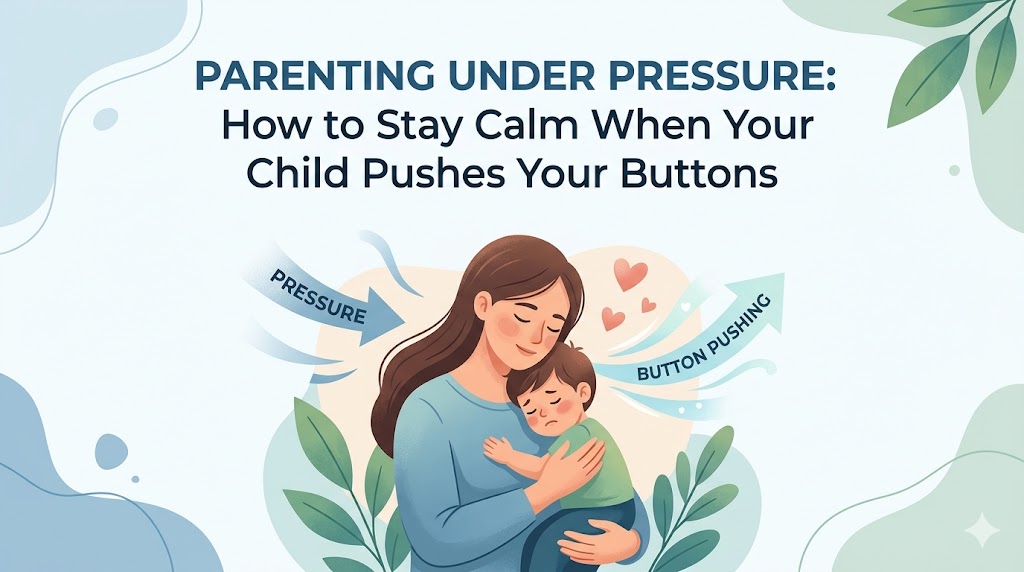
Parenting can be one of life’s greatest joys—but it can also be one of its greatest challenges.
Every parent has experienced those moments when a child refuses to listen, talks back, throws a tantrum, ignores instructions, or repeatedly tests boundaries. During these stressful situations, it’s easy to feel frustrated, overwhelmed, and angry.
The reality is that children often push limits as part of their development. However, how parents respond during these difficult moments can significantly impact a child’s emotional growth, behavior, and the overall parent-child relationship.
Learning to stay calm under pressure isn’t about being a perfect parent. It’s about developing healthy responses that create positive outcomes for both you and your child.
Why Children Push Boundaries
Many parents mistakenly assume that challenging behavior is intentional disrespect. While that can occasionally be true, children often push limits for developmental reasons.
Children may be:
- Testing boundaries to understand expectations
- Seeking attention or connection
- Struggling to express emotions appropriately
- Feeling overwhelmed, tired, hungry, or frustrated
- Learning independence and self-control
- Reacting to changes in their environment
Understanding the reason behind the behavior can help parents respond more effectively rather than reacting emotionally.
The Cost of Losing Your Cool
When parents react with yelling, harsh criticism, threats, or explosive anger, several unintended consequences can occur.
Children may:
- Become fearful rather than respectful
- Learn unhealthy ways to handle emotions
- Withdraw emotionally
- Increase defiant behaviors
- Struggle with self-esteem
- Develop anxiety around communication
While occasional frustration is normal, repeated angry reactions can create long-term challenges within the family dynamic.
Recognize Your Triggers
One of the most effective parenting skills is learning to recognize your own emotional triggers.
Ask yourself:
- What behaviors frustrate me the most?
- When am I most likely to lose patience?
- Am I reacting to my child’s behavior or my own stress?
- Are there outside pressures affecting my mood?
Common parenting triggers include:
- Repeatedly ignoring instructions
- Sibling conflicts
- Public misbehavior
- Homework battles
- Bedtime resistance
- Disrespectful language
Awareness is the first step toward gaining control over your reactions.
Pause Before You React
When emotions rise, your brain’s ability to think clearly decreases.
Before responding:
- Take a slow, deep breath.
- Pause for a few seconds.
- Lower your voice rather than raising it.
- Focus on the outcome you want to achieve.
A brief pause can prevent a situation from escalating and allows you to respond thoughtfully instead of reacting impulsively.
Focus on Teaching, Not Punishing
Discipline is most effective when it teaches rather than simply punishes.
Instead of asking:
“What punishment does my child deserve?”
Try asking:
“What does my child need to learn from this situation?”
Effective discipline focuses on:
- Accountability
- Problem-solving
- Respect
- Responsibility
- Emotional regulation
Children learn best when parents remain calm enough to guide rather than simply react.
Model the Behavior You Want to See
Children often learn more from what parents do than what they say.
If you want your child to:
- Stay calm during conflict
- Use respectful language
- Manage frustration appropriately
- Solve problems peacefully
Then they need to see those behaviors demonstrated consistently at home.
When parents model emotional control, children gain valuable tools for managing their own emotions.
Use Calm Communication Techniques
During difficult moments, simple communication strategies can make a significant difference.
Try:
- Speaking slowly and clearly
- Making eye contact
- Using short, direct instructions
- Avoiding sarcasm or insults
- Validating feelings while maintaining boundaries
For example:
Instead of:
“Why are you always acting like this?”
Try:
“I can see you’re upset. Let’s talk about what’s going on.”
Children are more likely to cooperate when they feel heard and respected.
Give Yourself Permission to Take a Break
Parents often encourage children to take a break when emotions run high, but adults benefit from the same strategy.
If you feel overwhelmed:
- Step into another room for a moment
- Take several deep breaths
- Drink a glass of water
- Count slowly to ten
- Gather your thoughts before continuing the conversation
Taking a brief pause can help prevent words or actions you may later regret.
Progress Matters More Than Perfection
No parent remains calm 100% of the time.
There will be moments when you lose patience or react in ways you wish you hadn’t. What matters most is recognizing those moments, taking responsibility, and continuing to improve.
When parents apologize appropriately and demonstrate accountability, they teach valuable life lessons about humility, responsibility, and growth.
Building Stronger Parent-Child Relationships
Children thrive when they feel safe, supported, and understood.
By learning healthy anger management and communication skills, parents can:
- Reduce household stress
- Improve cooperation
- Strengthen family relationships
- Increase mutual respect
- Create a more positive home environment
The goal isn’t to eliminate frustration—it’s to respond to it in ways that promote connection, learning, and growth.
Healthy Response Anger Management Services Can Help
At Healthy Response Anger Management Services, we provide parenting education and anger management programs designed to help parents develop healthier communication skills, improve emotional regulation, and build stronger family relationships.
If parenting challenges are causing stress, frustration, or conflict in your home, support is available. Learning effective anger management strategies can create lasting positive changes for both parents and children.
Contact Healthy Response Anger Management Services
Phone: (470) 814-0988
Email: HealthResponseAMS@gmail.com
Website: www.HealthyResponseAMS.com
Remember: Children may push your buttons, but your response has the power to shape the outcome. Staying calm isn’t always easy—but it is one of the greatest gifts you can give your child.