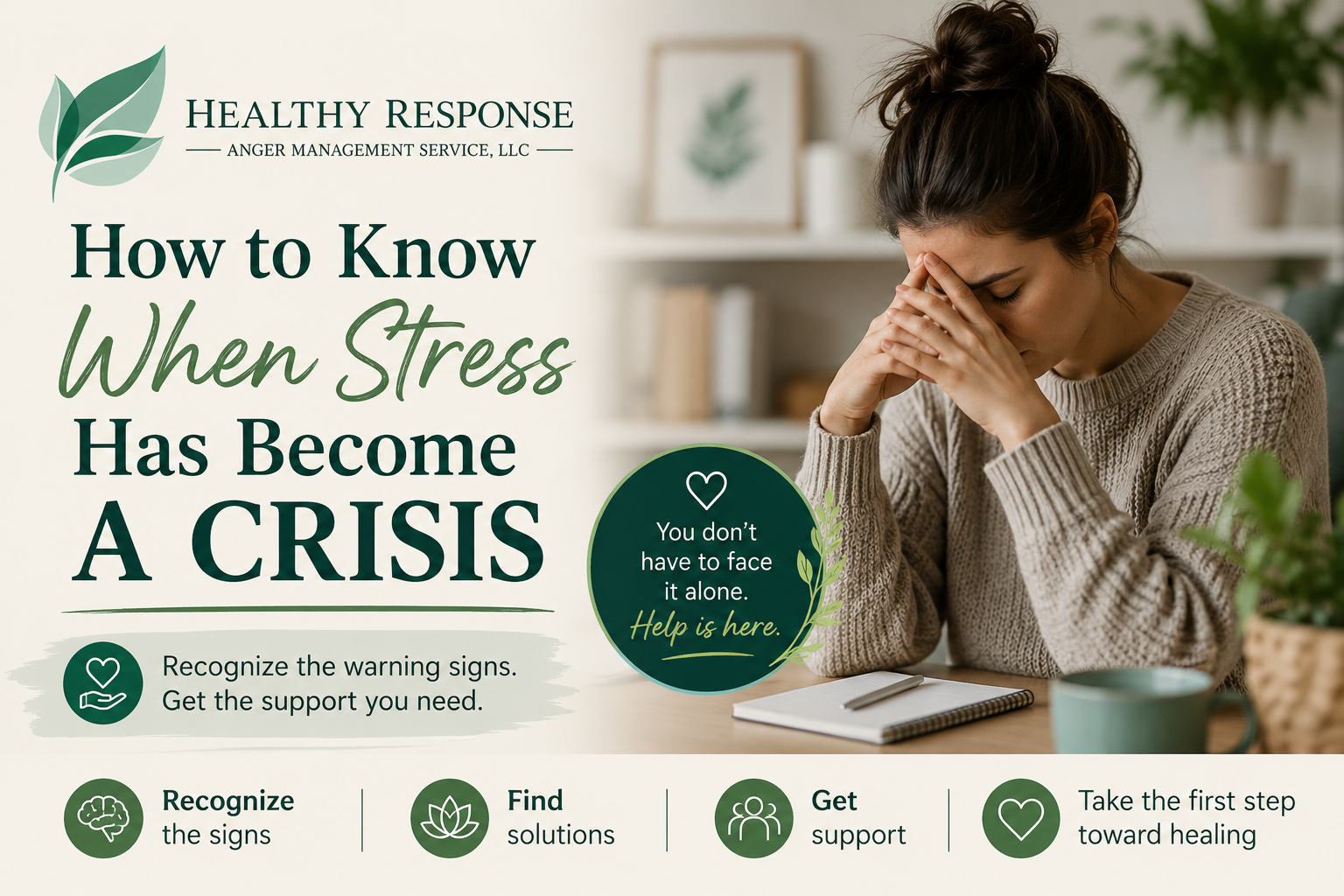
Life is full of challenges. Work responsibilities, family obligations, financial concerns, health issues, and unexpected life events can all create stress. While stress is a normal part of life, there are times when it becomes so overwhelming that it begins to affect your ability to function, think clearly, or care for yourself and those around you.
Knowing the difference between everyday stress and an emotional crisis is important. The sooner you recognize the warning signs, the sooner you can receive the support needed to regain stability and begin moving forward.
At Healthy Response Anger Management Services, we provide compassionate Crisis Intervention services designed to help individuals navigate difficult moments with confidence, clarity, and hope.
Understanding Normal Stress
Stress is your body’s natural response to challenges or demands. It can motivate you to solve problems, meet deadlines, or respond to difficult situations.
Common sources of stress include:
- Work or career changes
- Parenting responsibilities
- Financial concerns
- Relationship conflicts
- Moving to a new home
- Health issues
- Caring for loved ones
- Major life transitions
Most people experience periods of increased stress throughout their lives. With healthy coping skills and support, these stressful periods often improve over time.
When Stress Becomes More Than You Can Manage
Sometimes stress continues to build until it begins affecting every part of your life. What once felt manageable may suddenly feel impossible.
An emotional crisis doesn’t always happen because of one dramatic event. Often, it develops after weeks or months of accumulating pressure, emotional exhaustion, and unresolved challenges.
When your usual coping strategies no longer seem to work, it may be time to seek additional support.
Signs That Stress May Be Turning Into a Crisis
You Feel Emotionally Overwhelmed
If it feels like every small problem has become a major obstacle, your emotional reserves may be depleted.
You might notice:
- Constant worry
- Feeling emotionally drained
- Crying more often
- Difficulty calming yourself
- Feeling trapped or hopeless
Your Relationships Are Suffering
High levels of stress often affect how we communicate with others.
You may find yourself:
- Arguing more frequently
- Becoming easily irritated
- Withdrawing from family and friends
- Losing patience with your children
- Feeling disconnected from loved ones
Everyday Tasks Feel Impossible
Simple responsibilities can suddenly feel overwhelming.
Examples include:
- Getting out of bed
- Going to work
- Managing household responsibilities
- Returning phone calls
- Paying bills
- Making decisions
You’re Having Trouble Sleeping
Sleep often becomes one of the first things affected during periods of emotional distress.
You may experience:
- Difficulty falling asleep
- Waking throughout the night
- Sleeping too much
- Feeling exhausted even after sleeping
Your Physical Health Is Being Affected
Emotional stress frequently shows up physically.
Common symptoms include:
- Headaches
- Muscle tension
- Stomach problems
- Fatigue
- Increased heart rate
- Changes in appetite
You’re Feeling Isolated
Many people experiencing a crisis begin pulling away from others.
You may:
- Avoid social activities
- Stop answering calls or texts
- Feel like no one understands
- Believe you’re a burden to others
Isolation often makes emotional distress even more difficult.
Common Situations That Can Lead to a Crisis
While everyone’s experience is different, crisis intervention can be especially helpful after:
- The loss of a loved one
- Divorce or separation
- Domestic conflict
- Job loss
- Financial hardship
- Medical diagnosis
- Family conflict
- Parenting challenges
- Major life transitions
- Traumatic events
- Sudden unexpected changes
Experiencing any of these situations doesn’t mean you’re weak—it means you’re human.
What Is Crisis Intervention?
Crisis Intervention is short-term, solution-focused support designed to help individuals stabilize during difficult situations.
The goal isn’t simply to “fix” the problem overnight.
Instead, Crisis Intervention helps you:
- Reduce emotional overwhelm
- Regain a sense of calm
- Improve decision-making
- Develop healthy coping strategies
- Identify immediate priorities
- Create a practical plan for moving forward
- Connect with additional resources when appropriate
Many people find that simply having someone who listens without judgment can make a significant difference during challenging times.
Seeking Help Is a Sign of Strength
One of the biggest misconceptions is that asking for help means you’ve failed.
In reality, recognizing when you need support is an act of courage.
Just as you would seek medical care for a physical injury, it’s equally important to care for your emotional well-being when life becomes overwhelming.
Early support often prevents small challenges from becoming much larger problems.
How Healthy Response Anger Management Services Can Help
At Healthy Response Anger Management Services, we understand that every person’s situation is unique. Our Crisis Intervention services provide a compassionate, supportive environment where you can talk openly, explore practical solutions, and regain a sense of hope.
Whether you’re facing overwhelming stress, family challenges, grief, relationship difficulties, or a major life transition, you don’t have to navigate it alone.
Our goal is to help you regain stability, strengthen your coping skills, and move forward with confidence.
Take the First Step Toward Healing
If life feels heavier than usual and you’re struggling to cope, reaching out for support can make all the difference.
You don’t have to wait until things become unbearable.
Every journey toward healing begins with a single conversation.
Healthy Response Anger Management Services offers a FREE 30-minute consultation to discuss your situation and determine how we can best support you.
Contact us today to schedule your confidential consultation and take the first step toward a calmer, healthier future.